Complaint history
Dates, odors, visible growth, occupant observations, leak events, repairs, and when symptoms or damage change.
Define the question before collecting samples
A useful mold inspection explains the building and moisture conditions. Sampling is an optional tool—not a substitute for finding leaks, wet materials, visible growth, or damaged assemblies.
Metro Atlanta · Homes, rentals, and commercial properties
Quick answer
An inspection looks for moisture sources, visible conditions, odors, damaged materials, and pathways through the building. Testing is useful when a specific air or surface sample will answer a decision-making question; it is not automatically required before every remediation project.
An inspection reviews the property history, moisture sources, visible conditions, odors, materials, HVAC pathways, and areas of concern. Testing collects air, surface, or material samples for a defined purpose and sends them to a laboratory.
If visible mold and the moisture source are already clear, sampling may not change the removal plan. Ask the inspector to state the question each sample is intended to answer.
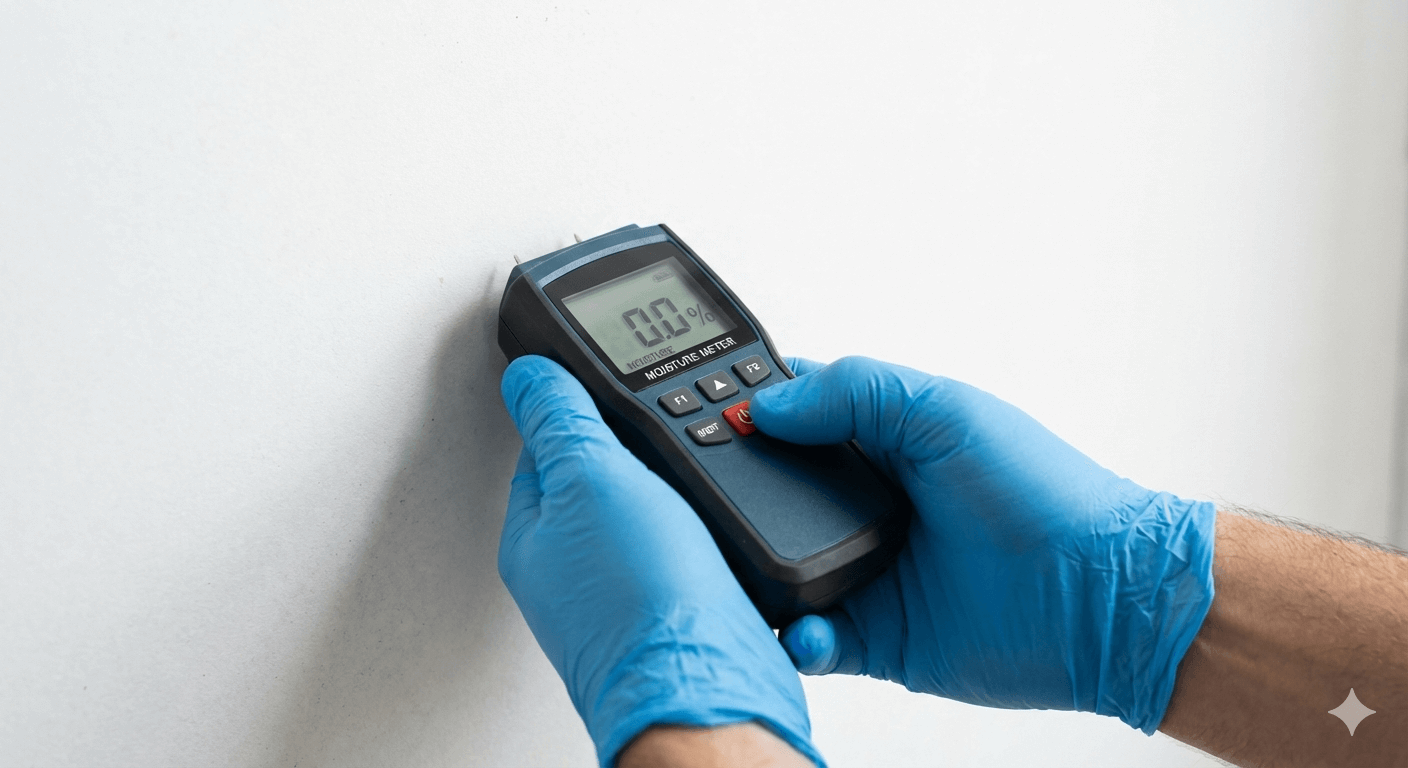
A useful inspection
Dates, odors, visible growth, occupant observations, leak events, repairs, and when symptoms or damage change.
Meter readings, staining, condensation, drainage, roof and plumbing clues, material condition, and limitations of access.
Adjacent rooms, attic or crawl space, wall cavities, shafts, HVAC returns, pressure differences, and outdoor conditions.
Sample location, type, outdoor comparison, laboratory method, chain of custody, and the decision the result will inform.
What was observed, what could not be inspected, what requires invasive investigation, and what is outside the inspector’s scope.
Immediate safety steps, source correction, remediation protocol needs, repair priorities, and whether independent verification is recommended.
Hire carefully
Clarify whether the inspector also sells remediation. For larger or disputed losses, independence can reduce conflicts of interest.
Request the rooms, systems, accessible areas, tools, limitations, and expected duration in writing.
Ask how each result will change a decision. A large generic panel is not automatically more informative.
Request laboratory identity, methods, reporting format, chain of custody, and who interprets results.
Expect photographs, observations, moisture data, sample locations, laboratory reports, limitations, and prioritized recommendations.
Book a consultation
Best when the source, extent, material condition, or path through the building is unclear. The report should document observations, readings, limitations, and next actions.
Useful only when a defined sample can change a decision. Ask for the location, method, comparison, laboratory, chain of custody, interpretation, and limitations.
For a larger, sensitive, insurance, or disputed project, define the completion criteria and independent evaluator before the remediation company begins work.
Use testing appropriately
EPA guidance emphasizes correcting the water problem and cleaning mold promptly. Testing should support a building decision rather than delay obvious source control.
Frequently asked questions
Not always. Visible growth, water damage, or wet materials can be enough to require action. Sampling is most useful when it answers a specific question that inspection alone cannot resolve.
A sample represents conditions at a place and time. Interpretation depends on locations, outdoor comparison, building operation, weather, methods, and the question being asked.
For small straightforward projects, one company may handle both. For larger, sensitive, insurance, legal, or disputed projects, consider an independent assessor.
Call with the property address, affected rooms, odor or visible-growth pattern, leak history, repairs, HVAC relationship, access limits, and the decision you need to make. The independent provider should then explain whether inspection, air sampling, surface sampling, or another specialist fits the request.
Remediation decisions usually depend more on moisture source, affected area, materials, and building conditions than on a dramatic common name such as “black mold.”
Atlanta Mold Fix is here to help
Share the address, property type, moisture timeline, and what you are seeing.