A dark patch on shower grout or a musty spot near a window often sends people searching for what kills mold naturally. Vinegar, baking soda, tea tree oil, and hydrogen peroxide may help with limited surface cleaning, but none can correct a roof leak, dry wet drywall, or remove growth buried inside porous material. The moisture source, affected material, and size of the problem matter more than the popularity of a home remedy.
Quick Answer
- No natural mold killer works equally well on every mold species or building material.
- For a small area on a washable hard surface, cleaning with detergent, water, and thorough drying is often more important than “killing” alone.
- Vinegar has some antifungal activity, but it does not reliably control every common indoor mold.
- Baking soda is useful as a mild abrasive and odor-control aid, not as a whole-house mold treatment.
- Tea tree oil and hydrogen peroxide may inhibit some fungi, but neither repairs water-damaged porous materials.
- If mold returns, smells persist, or materials remain wet, stop treating the stain and find the moisture source.
Popular Natural Mold-Killing Methods
Popular natural mold killers can sometimes improve a small, accessible surface problem, but they should be treated as cleaning tools rather than complete remediation systems. Federal guidance focuses on removing visible mold from hard surfaces, drying the area completely, and correcting the water problem—not on finding one liquid that sterilizes a building.
Vinegar
White household vinegar contains acetic acid and can inhibit certain fungi, which is why it appears in so many home remedies for mold. Laboratory research, however, has found limited and species-dependent antifungal activity. Vinegar may affect one type of indoor mold while doing little against another, so it is a possible cleaner for a small patch on a compatible hard surface, not a universal answer for drywall, wall cavities, insulation, or carpet backing.
Acidic cleaners may damage natural stone, some grout, metals, and protective finishes. Test an inconspicuous area, follow the material manufacturer’s instructions, ventilate the room, and never combine vinegar with other cleaning chemicals.
Baking Soda
Baking soda is most useful as a gentle abrasive that helps loosen surface residue and reduce odor. Sodium bicarbonate has shown antifungal effects under some laboratory conditions, but that does not make it a reliable mold killer across the many species and materials found in buildings.
A baking soda paste may help scrub a small washable area after the moisture source is corrected. It cannot reach the back of wet drywall, dry damp subflooring, clean contaminated insulation, or explain discoloration that keeps returning near a baseboard.
Tea Tree Oil
Tea tree oil contains compounds with antifungal activity in laboratory research, but evidence for standardized, real-world mold removal in buildings is limited. Concentration, contact time, mold species, surface type, and debris all affect performance, while household recipes rarely control those variables.
Plant-derived does not automatically mean harmless. Essential oils can irritate skin or eyes and create strong indoor odors. Tea tree oil should not be fogged through a room, sprayed into ductwork, or used to mask a musty smell coming from a wall or crawl space.
Hydrogen Peroxide
Hydrogen peroxide is often grouped with natural mold removal products because it breaks down into water and oxygen, although it is still a reactive chemical cleaner. Research shows antifungal activity on certain hard surfaces under controlled conditions, but results vary by organism, concentration, surface, and contamination level.
A consumer product may help clean a small spot on a compatible nonporous surface, but it can discolor fabrics or finishes. It will not make wet drywall, carpet padding, ceiling tile, or insulation salvageable. Follow the label, provide ventilation, and never mix it with vinegar or other cleaners.
What Natural Methods Can Realistically Handle
Natural methods are most realistic for a small, accessible patch on a hard or readily washable surface when the moisture source is known and corrected. Examples include limited spotting on tile, sealed glass, certain finished surfaces, or a frequently damp bathroom area where ventilation and cleaning need improvement.
Even then, scrubbing and removal matter. Killing mold without physically removing residue is not enough, because dead spores and fragments can remain. Clean the area, dry it completely, and check it again after normal use or the next humid period. If the spot returns, the cause may be condensation, a plumbing seep, failed caulk, poor exhaust, or moisture behind the finish.
Where Natural Solutions Fall Short
Natural solutions fall short when mold extends into porous material, covers a larger area, follows substantial water damage, or may be concealed inside the building. Drywall paper, ceiling tiles, carpet padding, insulation, and some composite materials contain spaces that mold can penetrate, making complete surface cleaning difficult or impossible.
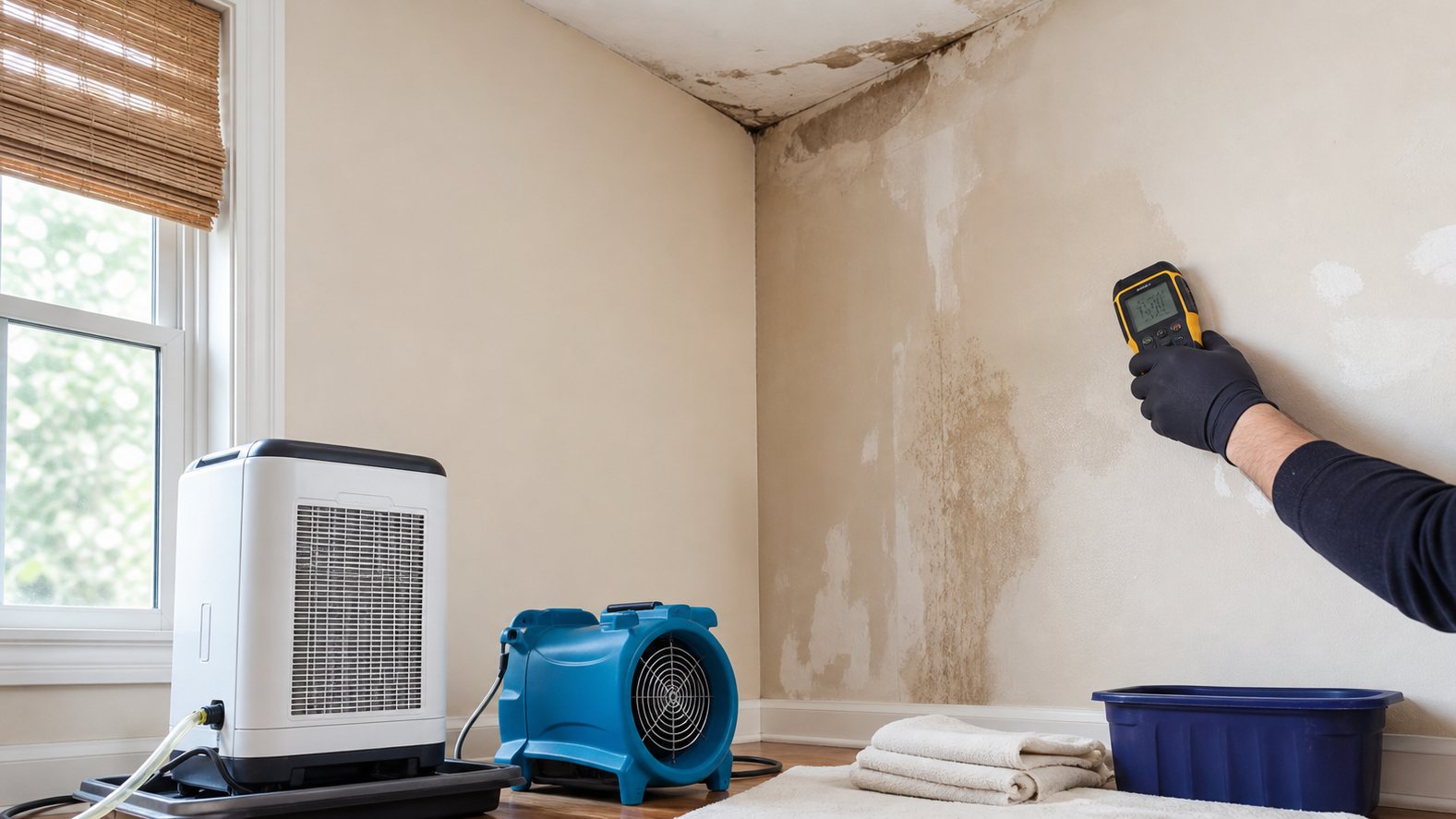
This is especially true after water intrusion, since mold growth after a leak can happen faster than natural cleaning can keep up with. In Atlanta, a roof leak after heavy rain, an overflowing HVAC drain pan, humid crawl-space air, or a slow plumbing leak can keep materials damp even when the visible stain looks dry. Spraying vinegar on the wall will not dry the cavity, inspect the insulation, or correct the leak.
Natural cleaners also cannot define the full boundary of hidden growth. A musty odor near an HVAC closet, spreading ceiling stains, soft drywall, lifting flooring, or damp insulation deserves investigation before repeated cleaning changes the appearance of the evidence.
Safety Considerations Before Trying DIY Methods
DIY mold cleaning should begin with exposure control, ventilation, surface compatibility, and a clear point at which to stop. People with respiratory concerns, significant sensitivities, immune suppression, or other health concerns should consult a qualified healthcare professional and may want to avoid disturbing visible mold.
Before cleaning:
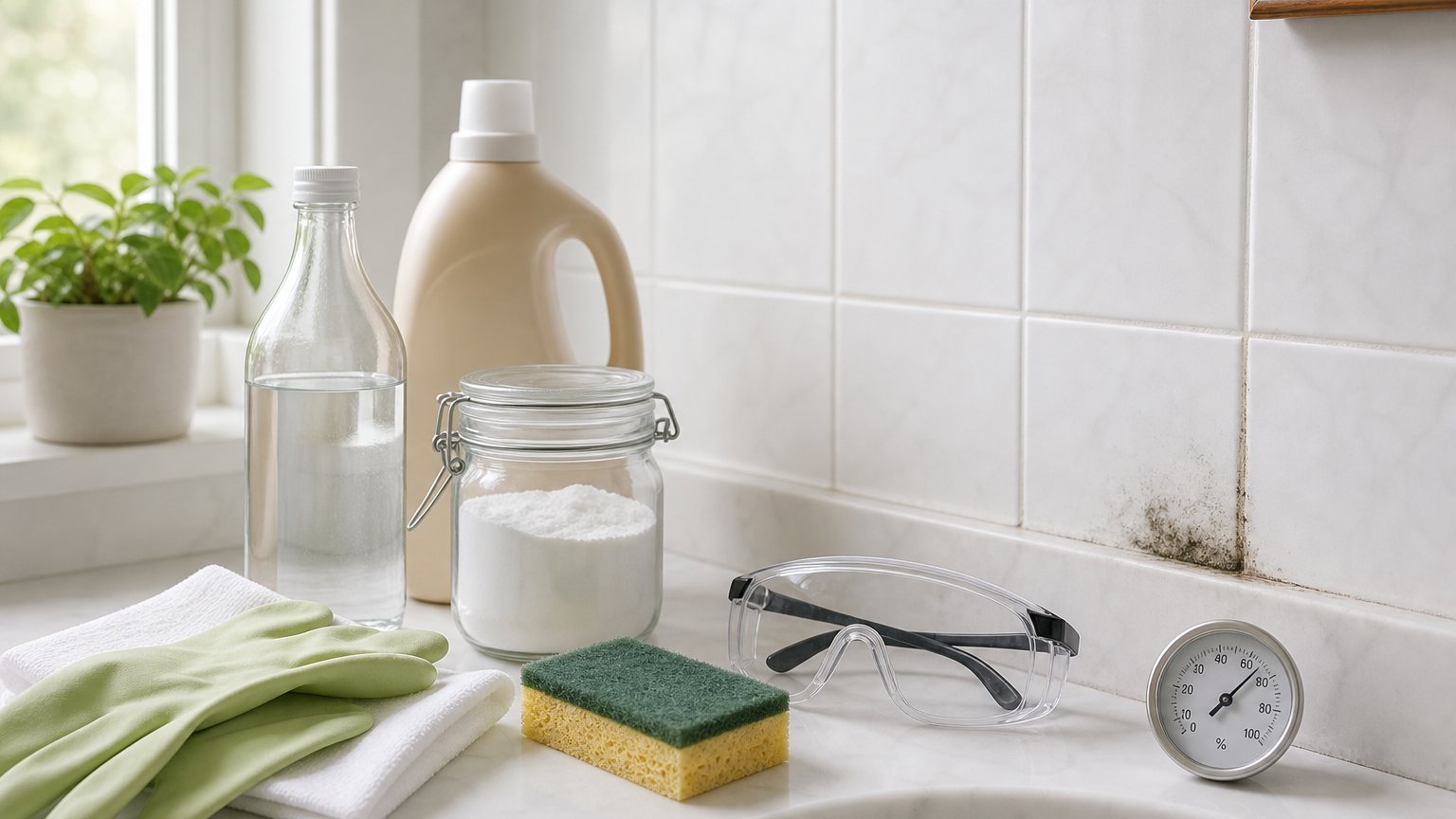
- Wear gloves and eye protection; consider a properly fitted N95 respirator when mold may be disturbed.
- Keep children and pets away from the work area.
- Ventilate when conditions allow and follow every product label.
- Never mix cleaning products. Vinegar and hydrogen peroxide can form peracetic acid, while bleach mixed with ammonia or other cleaners can produce dangerous vapors.
- Do not sand, dry-brush, or aggressively scrape moldy material in a way that spreads dust.
- Stop if the material is soft, extensively damaged, sewage-affected, difficult to access, or connected to a contaminated HVAC system.
What Trusted Public Health and Cleanup Guidance Emphasizes
Public-health and environmental guidance puts moisture control and physical removal ahead of claims about a “natural” fungicide.
- Correct the roof, plumbing, condensation, drainage, or humidity problem before considering cleanup complete.
- Clean appropriate hard surfaces with water and detergent, then dry them fully.
- Remove porous materials when mold cannot be cleaned from their internal spaces.
- Use gloves, eye protection, respiratory protection, and ventilation appropriate to the work.
- Do not paint or caulk over active mold or damp material.
- Consider qualified help for areas larger than roughly 10 square feet, extensive water damage, hidden growth, contaminated water, or HVAC involvement.
When Natural Cleaning Isn’t Enough
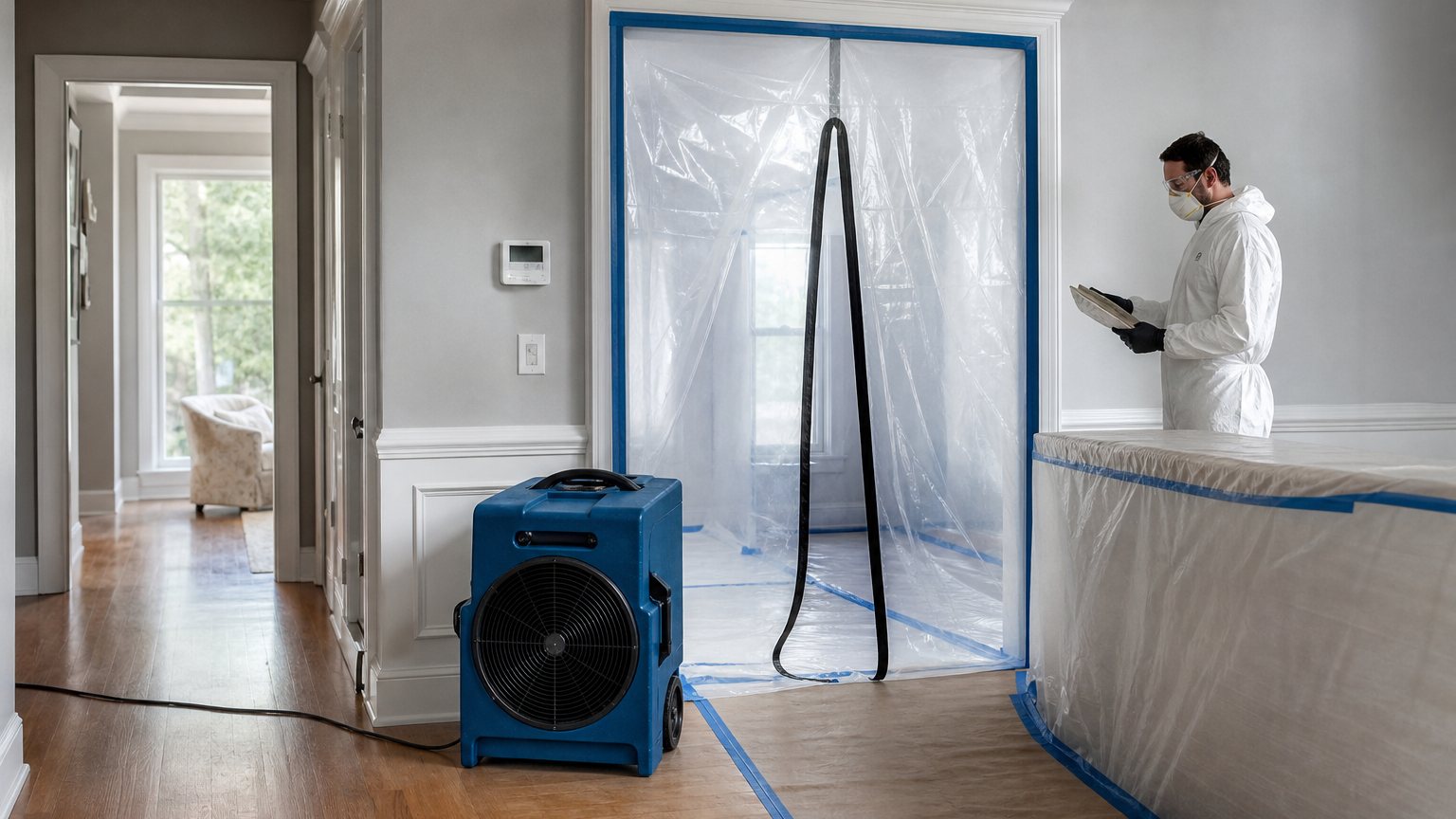
Natural cleaning is not enough when the same patch returns, the odor remains, the affected material is porous, or the moisture source cannot be identified. It is also a poor fit for widespread growth, post-flood conditions, contaminated water, inaccessible crawl spaces, wet insulation, or suspected mold inside an air-handling system.
For a deeper look at long-term results, see our article, “can mold be fully removed?” An assessment can help separate a limited surface condition from a larger moisture problem and define which materials can be cleaned, which may need removal, and what must be dried or repaired first. That is usually the real issue.
Frequently Asked Questions
Does vinegar kill mold?
Vinegar can inhibit some molds, but it does not reliably kill every common indoor species. It may help with limited cleaning on a compatible hard surface when the moisture source has been corrected and the residue is physically removed.
Is baking soda or vinegar better for mold?
Neither is universally better. Baking soda mainly helps with gentle scrubbing and odor, while vinegar has limited species-dependent antifungal activity; the correct choice also depends on whether the surface tolerates acid.
What kills mold naturally on bathroom surfaces?
For a small bathroom spot, detergent, water, physical scrubbing, and complete drying are often the most practical starting point. Better exhaust, shorter periods of surface wetness, and repair of failed caulk or leaks are what reduce recurrence.
Can I use tea tree oil for mold in a crawl space?
Tea tree oil is not an adequate response to widespread or concealed crawl-space mold. Atlanta crawl spaces may involve humid outdoor air, soil moisture, drainage, plumbing leaks, wet insulation, or HVAC condensation, all of which must be evaluated separately.
Will natural mold removal keep mold from coming back?
Only if the moisture condition is also corrected. A clean surface can develop new growth when humidity, condensation, leakage, or water intrusion continues.
Request a Professional Mold Assessment
If visible mold, musty odors, recurring stains, or damp materials remain after limited surface cleaning, request an assessment for your Atlanta property. The affected area, likely moisture source, material condition, and practical next steps can then be discussed before more cleaning or repair work begins.