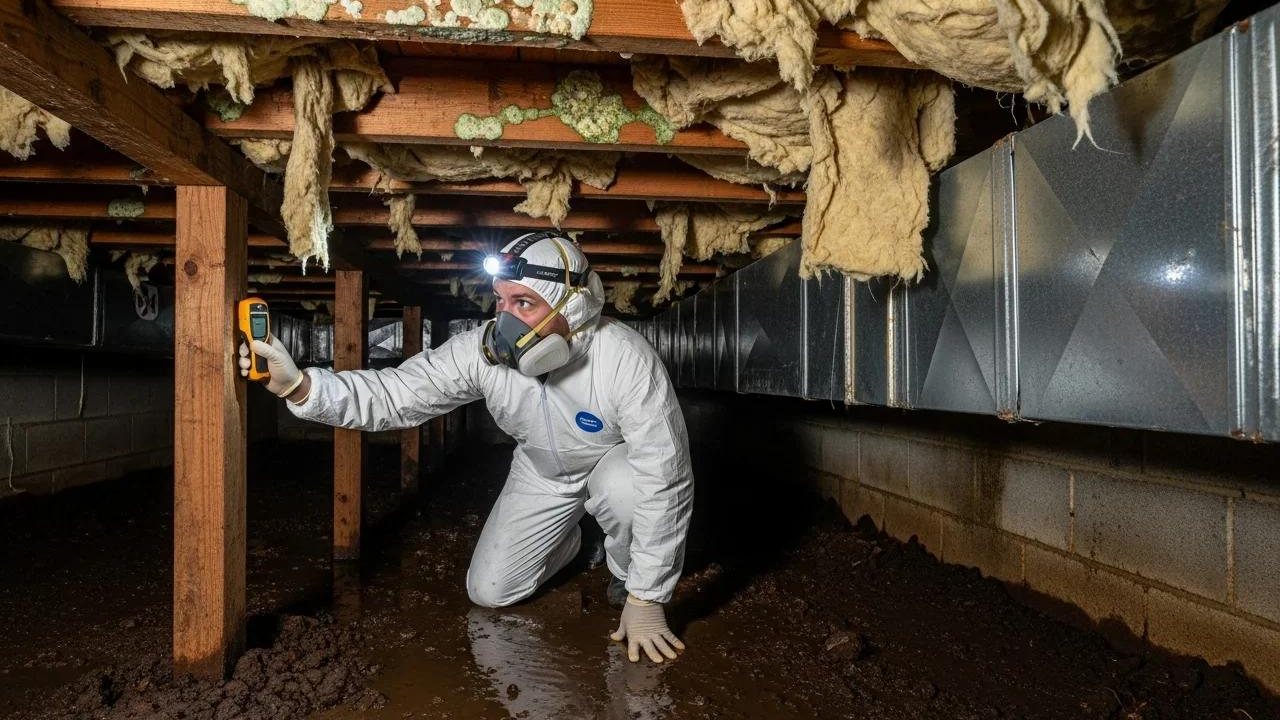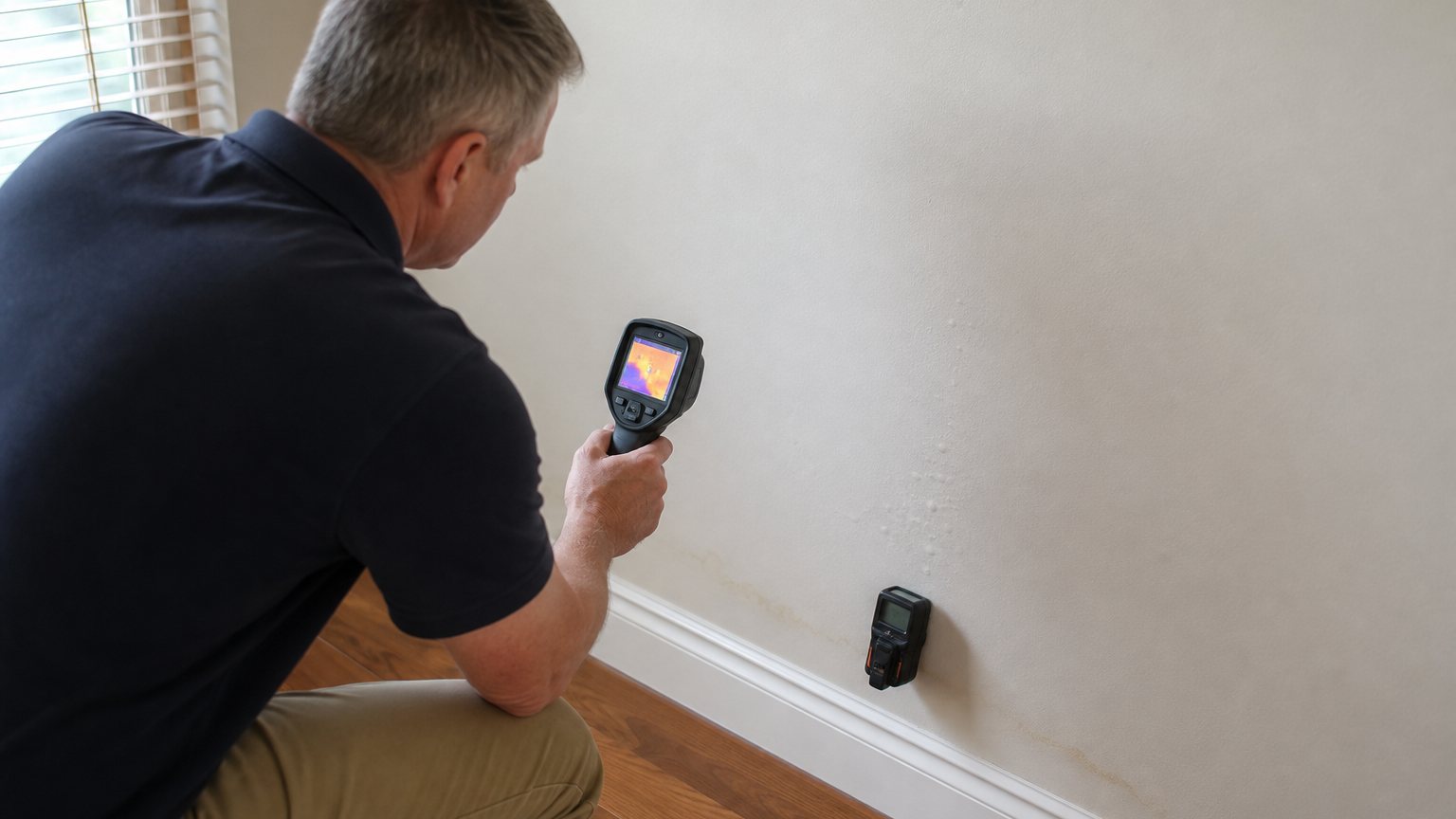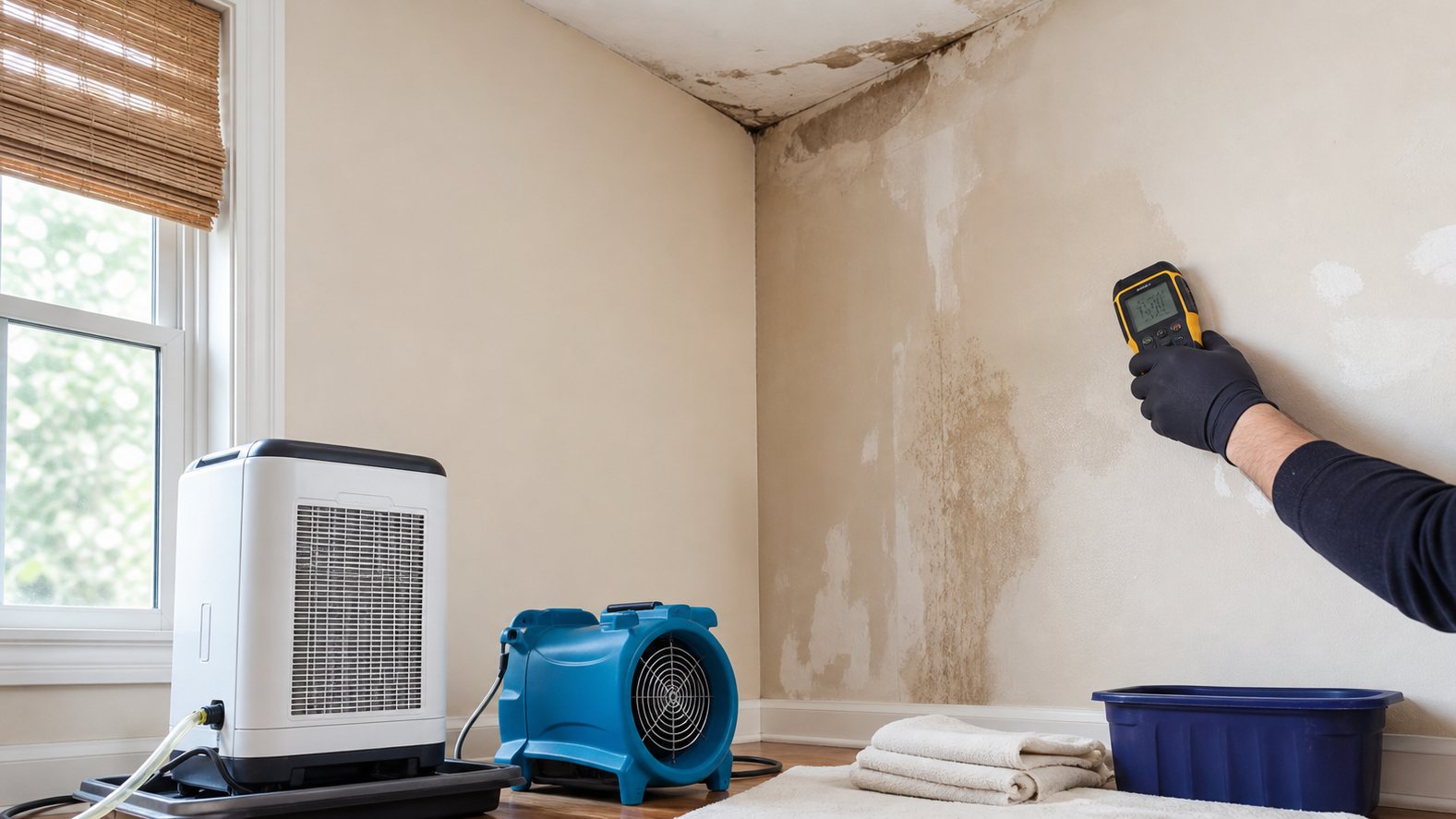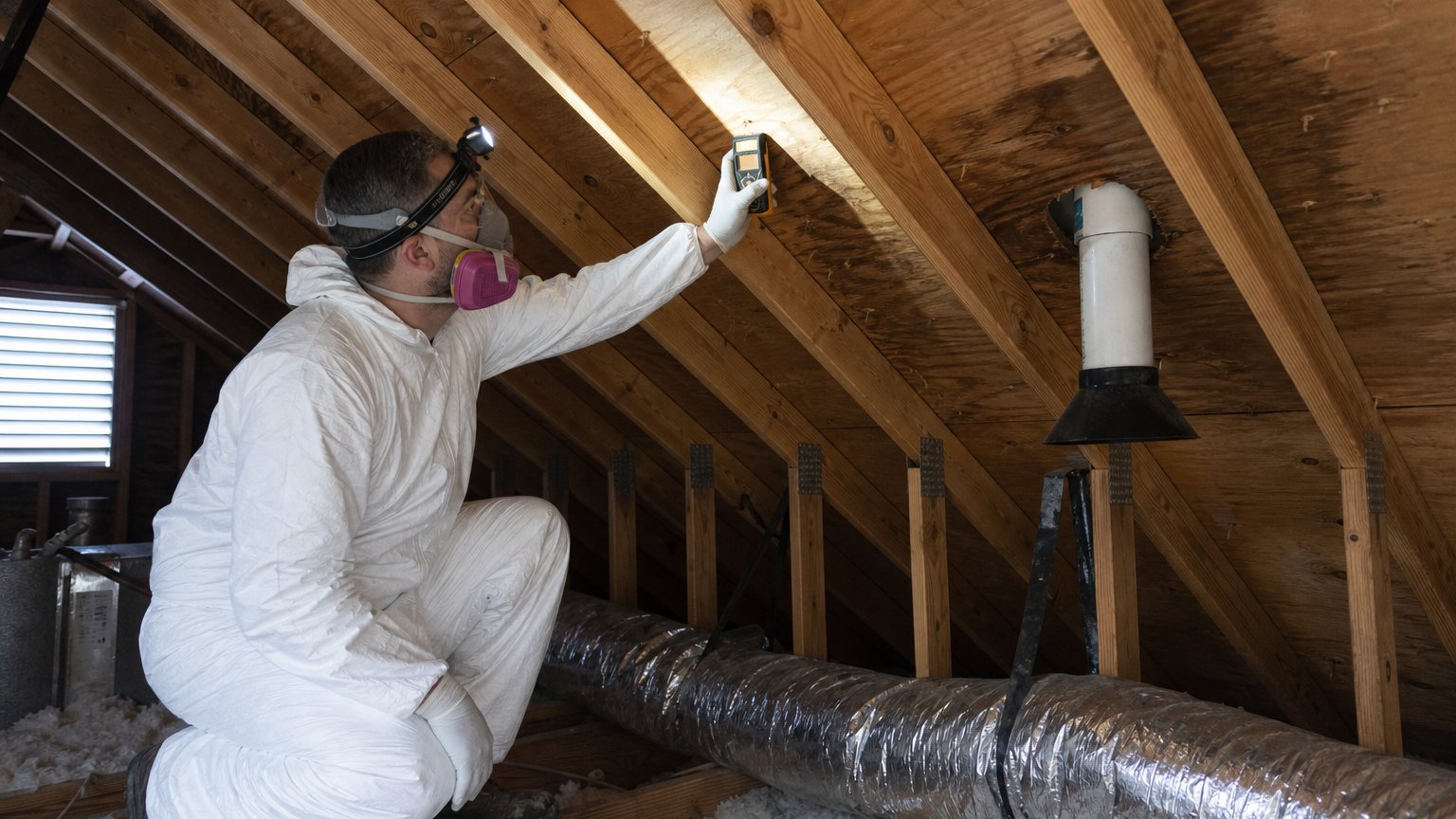
Dark spotting on roof sheathing, damp insulation, or a musty odor near the attic hatch usually points to a moisture problem above the living space. Understanding attic mold causes and fixes is especially useful in Georgia, where rain, humid outdoor air, air-conditioned ductwork, and roof penetrations can affect attic materials. Cleaning visible growth is only part of the job. The water, condensation, or air-leakage source also has to be corrected.
Quick Answer
- Roof leaks can wet sheathing, rafters, and insulation before water reaches the ceiling below.
- Humid attic air may condense on cold ducts, refrigerant lines, or other cool surfaces.
- Bathroom and kitchen exhaust should terminate outdoors, not release moist air into the attic.
- Blocked soffits, missing baffles, insulation gaps, and ceiling air leaks can disrupt how a vented attic manages moisture.
- Surface treatment will not prevent recurrence if the roof, duct, exhaust, or air pathway remains active.
- Widespread growth, soft roof decking, unsafe access, or HVAC involvement deserves qualified assessment.
Why Attics Are Prone to Mold in Georgia's Climate
Georgia attics sit between warm, humid outdoor conditions and an air-conditioned interior. The assembly can stay dry when the roof, air barrier, insulation, ductwork, and ventilation path work together. Problems begin when wind-driven rain enters the roof, conditioned air leaks through the ceiling, an exhaust fan releases moisture into the attic, or humid air contacts cold equipment.
The attic design matters. A traditional vented attic is intended to separate the living area with an air-sealed and insulated ceiling while outdoor air moves through planned vents. An unvented or conditioned attic follows a different moisture strategy. Adding vents without understanding the existing assembly can fail to correct the source and may create new condensation paths.
Mold spores are present in normal environments. Growth becomes a building problem when attic wood, paper facings, dust, or insulation stays damp. That is why attic mold should be approached as evidence of moisture rather than as a stain that only needs a stronger chemical.
The Most Common Causes of Attic Mold
The most common causes are roof water intrusion, condensation on cold surfaces, indoor air leaking through the ceiling, exhaust discharged into the attic, and insulation or ventilation defects. Several causes can occur at the same time.
Roof Leaks
A roof leak can wet attic materials without producing an obvious drip in the room below. Water may follow a rafter, nail, pipe penetration, or underlayment before soaking the roof deck or insulation away from the entry point. A small stain below one repaired penetration is a different condition from broad staining across several roof planes.
Look for water tracks, darkened sheathing, rusted fasteners, damp insulation, softened wood, or changes that become more visible after rain. Common investigation points include flashing, valleys, vent boots, chimneys, skylights, roof-to-wall transitions, and damaged roofing. Cleaning before repairing the exterior defect usually leads to another wetting cycle.
Condensation on Ducts and Equipment
Condensation forms when humid attic air contacts a surface cold enough to reach the air's dew point. Poorly insulated ducts, gaps in duct jackets, cold refrigerant lines, and air handlers can collect water during long cooling cycles. Dripping or sweating may wet insulation and roof framing below even when the roof is sound.
Inspect the condition of insulation jackets, seams, boots, condensate pans, and drain lines. A cold duct should be sealed and insulated appropriately; wiping condensation away does not correct the temperature and humidity relationship that created it.
Exhaust Fans Terminating in the Attic
Bathroom, kitchen, and dryer exhaust can add a concentrated moisture load when the duct ends inside the attic. The damp air may condense on nearby sheathing or framing, especially during cooler periods or around metal components. Exhaust should terminate outdoors in a way that does not immediately direct moist air back through a nearby intake.
Disconnected or crushed flex duct can be easy to miss beneath insulation. Look for a duct that stops short, loose clamps, water staining near the outlet path, or localized growth above a bathroom or laundry area.
Air Leakage and Insulation Problems
Ceiling penetrations can move indoor air into a vented attic. Gaps around attic hatches, recessed lights, plumbing stacks, wiring, duct boots, and wall top plates may bypass insulation. During cold weather, warm indoor air can carry moisture upward and condense on cold roof sheathing; during humid weather, uncontrolled air paths can also complicate the attic's moisture balance.
Thin, compressed, displaced, or wet insulation may create uneven surface temperatures. Insulation packed into the eaves can block soffit airflow, while missing baffles can allow insulation to move into the intended ventilation path. Air sealing and insulation changes should fit the actual attic design rather than rely on a generic depth or vent count.
How to Spot Attic Mold and Moisture Early
Early attic mold often appears as a pattern of moisture clues rather than one dramatic patch. Check after heavy rain, roof work, HVAC service, or a plumbing event, and compare what you see with older photos when available.
Watch for:
- speckled, fuzzy, or irregular discoloration on sheathing, rafters, or trusses;
- a musty odor near the attic hatch, an upstairs closet, or a ceiling register;
- damp, flattened, stained, displaced, or missing insulation;
- condensation or water marks on ducts, lines, pans, or air handlers;
- rusted nail tips, water trails, or staining around roof penetrations;
- peeling ceiling paint, brown rings, soft drywall, or recurring upstairs stains.
Color alone cannot identify the mold type or define the affected area. Moisture history, material condition, odor, and pattern are more useful for deciding what should be inspected. Routine air sampling is not automatically required when visible growth and a clear moisture source are already present.
Surface Attic Mold vs. a Larger Moisture Problem
A limited surface condition may follow a brief, corrected event, while a larger moisture problem tends to produce recurring growth, wet insulation, soft materials, widespread staining, or changes across several attic zones. The distinction depends on source, duration, affected material, and extent—not the color of the growth.
Understanding whether mold can be fully removed helps set realistic expectations before repairs begin. Every ordinary building contains background spores, but active growth and damaged materials can be cleaned or removed and the conditions that supported growth can be corrected. No responsible scope can promise that a future roof leak or condensation problem will never create new growth.
A property assessment should identify which materials are sound enough to retain, which porous materials cannot be cleaned and dried, and whether the staining is old or connected to current moisture. Closing or coating the area before that decision can conceal evidence and slow drying.
Fixes That Actually Help Prevent Recurrence
Effective attic fixes correct the moisture pathway first, address affected materials safely, and verify that the attic can stay dry through normal weather and HVAC operation. The required work may involve more than one trade.
A corrective scope may include:
- Repairing roofing, flashing, penetrations, gutters, or storm openings.
- Redirecting bathroom, kitchen, or dryer exhaust outdoors.
- Sealing appropriate attic-floor penetrations and insulating the access hatch.
- Restoring blocked soffit pathways with correctly placed baffles in a vented attic.
- Sealing and insulating ducts or refrigerant lines that are sweating.
- Correcting condensate drainage around attic HVAC equipment.
- Removing wet insulation, drying retained framing, and cleaning or removing affected materials.
Attic repairs and access can affect the overall mold remediation cost in Georgia. A proposal should separate roof or HVAC repair, insulation, remediation, testing when justified, and reconstruction. That makes it easier to compare scopes and prevents a low price from hiding an unresolved moisture source.
When to Bring in a Professional
Qualified assessment is appropriate when growth is widespread, keeps returning, cannot be reached safely, or appears connected to roof structure, HVAC equipment, electrical components, contaminated water, or extensive wet insulation. Size matters, but access, material condition, and the risk of spreading debris into occupied rooms matter too.
Do not walk between attic joists without proper flooring and lighting. Avoid disturbing suspect material near exposed wiring, fragile ceilings, unstable roof framing, animal contamination, or an air-handling system. If the roof deck feels soft or structural damage is possible, keep out of the area and contact an appropriate building professional.
A useful attic proposal should document the suspected source, affected materials, planned removal or cleaning, protective controls, drying approach, separate repairs, and completion criteria. A promise to "treat" the attic without explaining moisture control is incomplete.
What Trusted Public Health and Cleanup Guidance Emphasizes
- Fix the roof leak, condensation, exhaust, or other moisture source first.
- Dry wet materials promptly; materials that cannot be cleaned and dried may need removal.
- Use appropriate gloves, eye protection, and respiratory protection when disturbing mold.
- Do not paint or apply coatings over moldy or water-damaged surfaces.
- Avoid operating HVAC equipment that is known or strongly suspected to be contaminated.
- Seek qualified help for larger, hidden, contaminated-water, HVAC-related, or otherwise complex conditions.
The EPA's mold and moisture guide provides a useful baseline for moisture control and cleanup decisions.
Frequently Asked Questions
Why is my attic moldy if the roof does not leak?
The source may be duct condensation, indoor air leaking through ceiling penetrations, a disconnected exhaust fan, blocked ventilation, or damp insulation. Roof leaks can also be intermittent and appear only during wind-driven rain.
Can attic mold be cleaned without replacing the roof?
Yes, when the roof is sound and the moisture comes from another correctable condition. If damaged roofing or flashing is allowing water inside, cleanup should be coordinated with roof repairs.
Does attic mold removal require replacing all insulation?
No. Wet, contaminated, compressed, or obstructive insulation may need removal, while dry and unaffected material may remain. The decision should follow the moisture path and material condition.
Is attic mold common in Atlanta homes?
Atlanta's warm, humid periods and regular rainfall can allow roof leaks, duct condensation, and slow drying to become attic moisture problems. That does not mean every Atlanta attic has mold or needs remediation.
Should attic mold be tested before removal?
Testing is often unnecessary when growth is visible and the moisture source can be identified. Sampling may help answer a specific documentation question, but it should not replace inspection or delay necessary water and drying repairs.
Book an Attic Mold Inspection
If you have noticed attic staining, damp insulation, a musty odor, signs of a past roof leak, or visible growth in an Atlanta-area property, contact Atlanta Mold Fix to discuss the affected materials, likely moisture sources, and practical inspection or remediation options.